.png)
Why Is My Pressure Washer Losing Pressure?
7 Common Causes (And When to Call a Pro)
4 min read
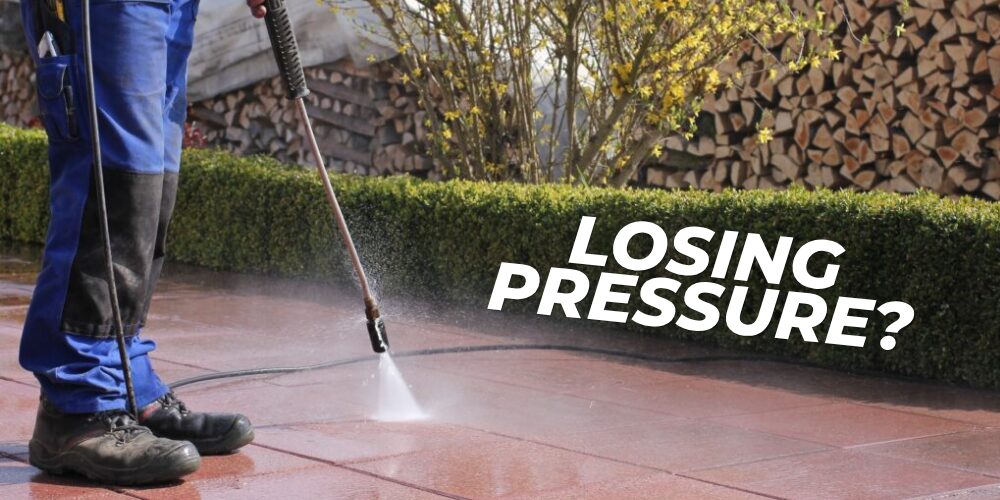
If your pressure washer suddenly isn’t hitting as hard as it used to — or won’t build pressure at all — you’re not alone. “No pressure” and “low pressure” are two of the most common service calls we get at Hotsy Equipment Company, and the good news is that many of the causes are easy to diagnose once you know what to look for.
Here’s a rundown of the usual suspects, roughly in the order we check them.
1. Worn or Damaged Nozzle
The nozzle is a wear item — over time, the orifice erodes and widens, which lets water pass through faster but at lower pressure. A worn nozzle is one of the single most common causes of “my machine used to blast through grime and now it barely rinses.”
Quick check
If you have a spare nozzle of the same size, swap it in. If pressure improves, you’ve found your problem.
2. Inlet Water Supply Issues
Pressure washers are picky about their water supply. If the machine isn’t getting enough incoming water (a kinked garden hose, a clogged inlet screen, a supply line that’s too small in diameter, or a well pump that can’t keep up), the pump can’t build proper pressure — no matter how strong the pump itself is.
Quick check
Make sure your incoming water line is free-flowing and meets the machine’s minimum GPM requirement.
3. Air in the System
Air pockets in the pump or hose lines cause sputtering, inconsistent pressure, or pressure that fades in and out. This is especially common after a machine has sat unused, after a hose has been disconnected, or if there’s a loose fitting somewhere upstream drawing in air.
4. Worn Pump Packing or Seals
Every pump has internal seals (packing) that keep water sealed against the pistons. Over time — especially with hard water or heavy-duty daily use — these seals wear out, and water begins bypassing internally instead of building pressure. This often shows up as pressure that’s low but steady, rather than fluctuating.
This is a repair job best left to a technician, since it involves disassembling the pump head.
5. Unloader Valve Problems
The unloader valve is what allows your machine to bypass water when you release the trigger, and it’s responsible for regulating pressure. A stuck, dirty, or worn unloader valve is a very frequent cause of unexplained pressure loss — and it can be tricky to diagnose without experience, because the symptoms often mimic a bad pump.
6. Clogged Filters or Chemical Injectors
A clogged inlet filter restricts water flow into the pump. If your machine has a chemical injector system, a partially clogged injector can also pull air into the system and cause pressure drops.
Tech Tip
Unloader symptoms often mimic a bad pump. Before replacing anything expensive, have a technician rule out the unloader — it’s a far cheaper fix.
7. Worn Pump Valves
Inside the pump, check valves (often called “valve kits”) open and close thousands of times per hour to move water through the system. As they wear, they stop sealing properly, causing pressure loss that gets worse over time. This is a very common failure point on machines with high run hours.
DIY vs. Professional Service
Nozzle swaps and checking your water supply are things you can troubleshoot yourself in a few minutes. But if you’ve ruled those out and you’re still losing pressure, chances are you’re dealing with internal pump wear — packing, valves, or the unloader — and that’s where a trained technician makes the difference between a quick, correct fix and hours of guesswork (or a repair that doesn’t actually solve the problem).
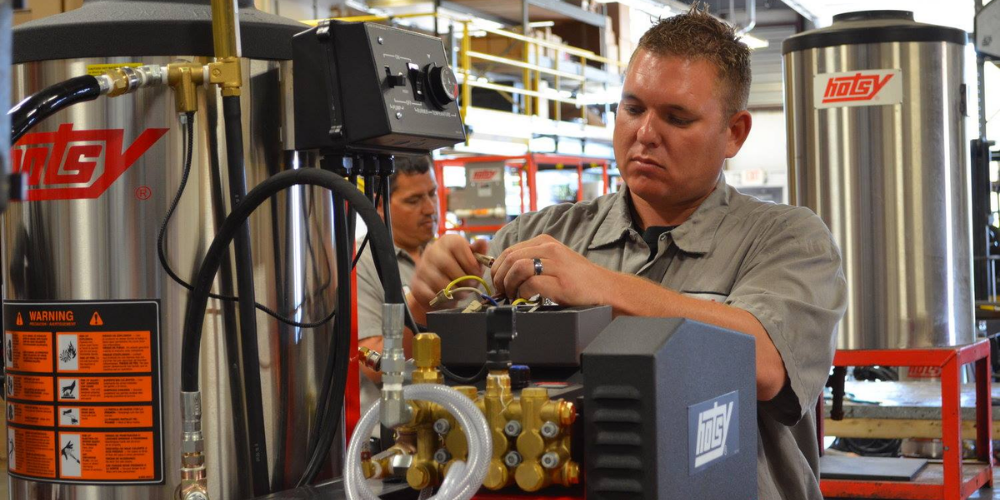
Don’t Let Low Pressure Slow Down Your Operation
Whether you’re running a fleet washing program, a wash bay, or a single machine that’s central to your daily cleaning, low pressure isn’t just inconvenient — it costs you time, water, chemical, and labor as jobs take longer to finish.
Hotsy Equipment Company’s certified technicians diagnose and repair pressure issues on all major pressure washer brands — not just pumps and unloaders, but the whole system, so you get to the real root cause the first time.
Schedule a service appointment today and let’s get your machine back to full pressure. Contact us to get started.
Related Posts
- How to Choose the Right Hot Water Pressure Washer for Your Application
 “What’s the best hot water pressure washer for what I do?” is one of the questions we hear most often…
 - My Hot Water Pressure Washer Won’t Heat Up — Here’s What’s Going OnYou turn on your hot water pressure washer expecting steam and grease-cutting heat, and instead you get… cold water. If your machine is running and spraying but the heat just won’t kick in, here’s what’s typically behind it — and why hot water machines are worth troubleshooting carefully rather than guessing.
- Why Is My Pressure Washer Losing Pressure? 7 Common Causes (And When to Call a Pro)If your pressure washer suddenly isn’t hitting as hard as it used to — or won’t build pressure at all — you’re not alone. “No pressure” and “low pressure” are two of the most common service calls we get at Hotsy Equipment Company, and the good news is that many of the causes are easy to diagnose once you know what to look for.