.png)
My Hot Water Pressure Washer Won’t Heat Up — Here’s What’s Going On
6 min read
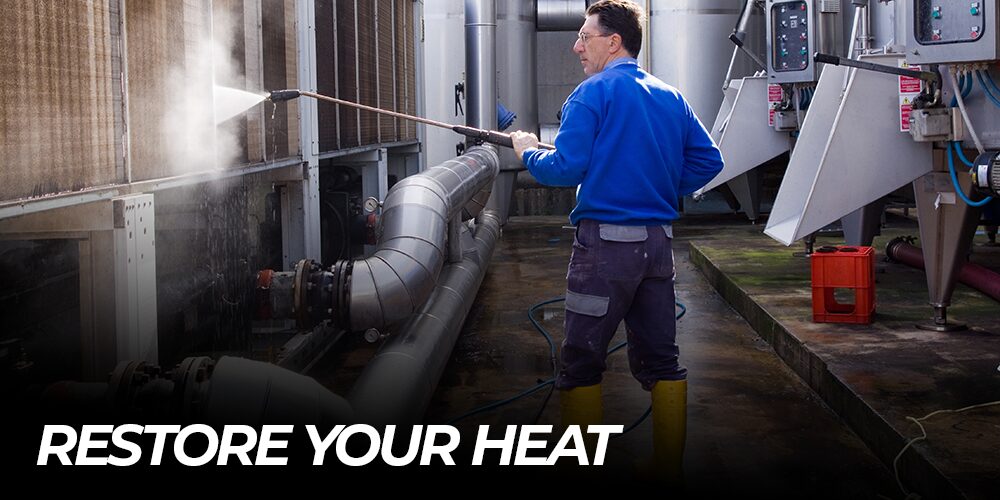
You turn on your hot water pressure washer expecting steam and grease-cutting heat, and instead you get… cold water. If your machine is running and spraying but the heat just won’t kick in, here’s what’s typically behind it — and why hot water machines are worth troubleshooting carefully rather than guessing.
Why Heat Matters (and Why It’s More Complex Than Cold-Water Machines)
Hot water pressure washers use a burner system — running on diesel, natural gas, or propane depending on the model — to heat water as it passes through a coil on its way out the nozzle. That means when heat fails, the culprit could be electrical, mechanical, or fuel-related. Here are the most common causes we see in the field.
1. No Fuel, or Fuel Supply Problems
It sounds obvious, but it’s the #1 reason we get called out for “no heat”: an empty fuel tank, a clogged fuel filter, water contamination in the fuel, or an air-locked fuel line. If your machine runs and pressurizes normally but the burner never fires, fuel supply is the first thing to rule out.
Quick check
Confirm the tank actually has fuel (not just that the gauge reads full), check the fuel filter for debris, and look for any water or discoloration in the fuel.
2. Burner Ignition Failure
Hot water units typically use an electronic ignition system similar to a furnace. If the igniter, ignition transformer, or electrode is worn, dirty, or misaligned, the burner won’t light — even with plenty of fuel available. You may notice a fuel smell without ever seeing the burner engage.
Quick check
If you smell fuel but never see or hear the burner ignite, that’s a strong sign of an ignition problem rather than a fuel supply issue — flag this for your technician.
3. Clogged or Dirty Nozzle on the Burner
Just like your spray nozzle wears out, the burner nozzle can clog with carbon buildup or debris, disrupting the fuel spray pattern needed for proper combustion. A dirty burner nozzle often causes intermittent heat, sooty exhaust, or heat that starts strong and then fades.
Quick check
Dark or sooty exhaust smoke, or heat that fades after a few minutes of good performance, points toward a dirty burner nozzle or combustion issue.
4. Faulty Flow or Pressure Switch
Many hot water machines have a safety switch that only allows the burner to fire once it detects adequate water flow or pressure. If this switch is dirty, miscalibrated, or failing, the machine may treat normal operation as “insufficient flow” and refuse to ignite the burner — even though everything else looks fine.
Quick check
If pressure and flow both look normal at the wand but heat still won’t engage, a faulty flow or pressure switch is a likely culprit — this one usually needs a technician’s test equipment to confirm.
5. Thermostat or Temperature Control Issues
If your machine has an adjustable temperature control, a faulty thermostat can prevent the burner from ever receiving the signal to fire, or it may cause the burner to shut off prematurely.
6. Soot or Scale Buildup in the Heating Coil
Over time, carbon soot on the outside of the coil (from incomplete combustion) or mineral scale on the inside (from hard water) acts as insulation, reducing how efficiently heat transfers to the water. In bad cases, this can make the machine seem like it “isn’t heating” when it’s actually the coil that needs cleaning or descaling.
Why Hot Water Machines Need Expert Diagnosis
Unlike a simple pressure problem, “no heat” issues often involve a chain of components — fuel delivery, ignition, safety switches, and combustion — that all have to work together. Misdiagnosing one part of that chain (say, replacing an igniter when the real issue is a flow switch) wastes time and money. It’s also worth noting that burner systems involve fuel and combustion, so incorrect repairs can be a genuine safety hazard.
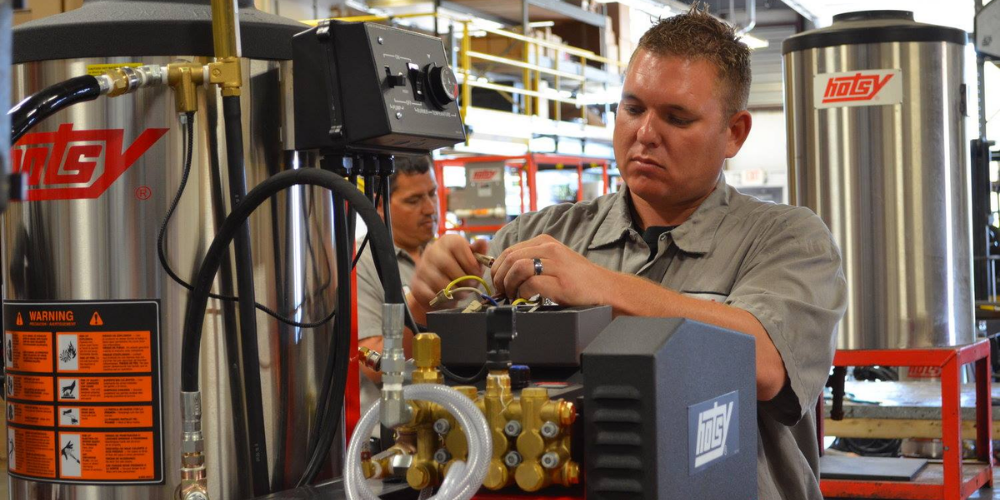
Get Your Hot Water Back — Fast
A hot water pressure washer that won’t heat isn’t just an inconvenience — for degreasing, sanitation, and cold-weather washing, heat is often the entire reason you invested in the machine.
Hotsy Equipment Company’s technicians specialize in hot water pressure washer systems, from burner and ignition repair to descaling and safety switch calibration. We’ll find the actual cause — not just replace parts and hope.
Schedule a service appointment today to get your hot water system running safely and reliably again. Contact us to get started.
Related Posts
- How to Choose the Right Hot Water Pressure Washer for Your Application
 “What’s the best hot water pressure washer for what I do?” is one of the questions we hear most often…
 - My Hot Water Pressure Washer Won’t Heat Up — Here’s What’s Going OnYou turn on your hot water pressure washer expecting steam and grease-cutting heat, and instead you get… cold water. If your machine is running and spraying but the heat just won’t kick in, here’s what’s typically behind it — and why hot water machines are worth troubleshooting carefully rather than guessing.
- Why Is My Pressure Washer Losing Pressure? 7 Common Causes (And When to Call a Pro)If your pressure washer suddenly isn’t hitting as hard as it used to — or won’t build pressure at all — you’re not alone. “No pressure” and “low pressure” are two of the most common service calls we get at Hotsy Equipment Company, and the good news is that many of the causes are easy to diagnose once you know what to look for.