.png)
How to Choose the Right Hot Water Pressure Washer for Your Application
6 min read
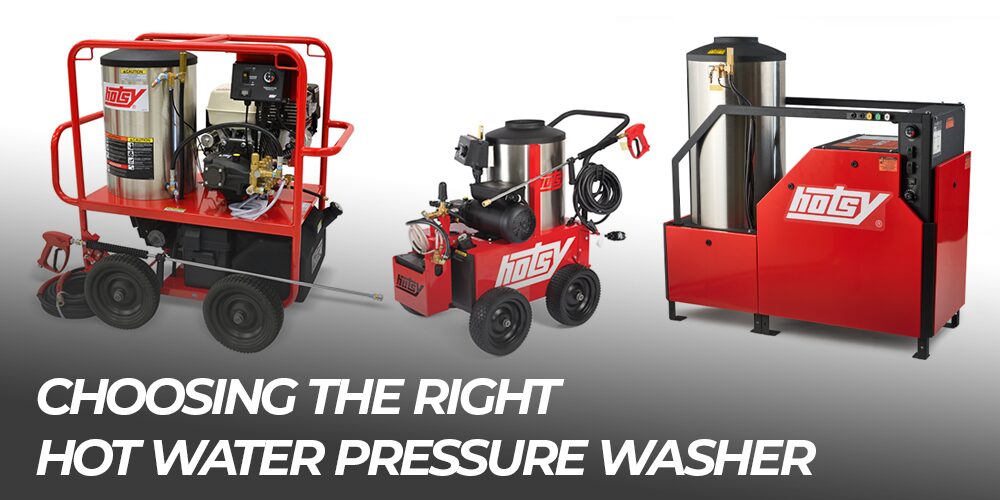
“What’s the best hot water pressure washer for what I do?” is one of the questions we hear most often — and the honest answer is: it depends on your application, your environment, and your budget. There’s no single “best” machine, but there is a best machine for you. Here’s how to think through the decision.
Start With What You’re Actually Cleaning
Different jobs call for different combinations of heat, pressure, and flow.
- Cold-climate outdoor use: Hot water isn’t just for cleaning power — it also prevents lines and equipment from freezing during winter washdowns.
- Heavy grease and oil (auto shops, food processing equipment, industrial machinery): You’ll want higher water temperatures — often machines capable of near-boiling or steam output — since heat does most of the work breaking down grease.
- Concrete, agricultural equipment, and general fleet washing: A mid-range hot water machine (around 2,000–3,500 PSI) with strong flow (GPM) usually offers the best balance of cleaning power and efficiency.
- Sanitation-focused cleaning (food and beverage plants, dairies): Look for machines built with sanitary considerations in mind — consistent temperature control, and often stainless steel components to meet washdown and corrosion requirements.
Quick check
If a job leaves grease or oil residue after cleaning, that’s usually a sign you need more heat, not more pressure.
Fuel Type: Diesel, Natural Gas, or Propane?
- Diesel-fired machines are the most common choice for portability and consistent performance, especially for mobile or trailer-mounted units.
- Natural gas-fired machines make sense for a fixed wash bay location with an existing gas line — lower operating cost, but not portable.
- Propane-fired machines offer a middle ground: more portable than natural gas, without needing diesel storage.
Quick check
If your machine needs to move between locations, cross natural gas off your list right away — it only makes sense for a fixed installation with an existing gas line.
Electric vs. Engine-Driven
- Electric-powered units are quieter and better suited to indoor use (wash bays, enclosed shops) where exhaust fumes and noise are a concern.
- Engine-driven (gas or diesel) units offer more flexibility for outdoor, mobile, or remote job sites where power hookups aren’t available.
Quick check
Washing indoors or in an enclosed space? Electric is almost always the safer, quieter choice — engine-driven units produce exhaust that isn’t suitable for enclosed areas.
PSI and GPM: Don’t Just Chase the Biggest Number
It’s tempting to assume “more pressure is better,” but too much PSI can actually damage delicate surfaces, and it doesn’t matter if your flow (GPM) isn’t sufficient to rinse and cover ground efficiently. The right combination depends on:
- Surface material (concrete vs. equipment vs. vehicles)
- How large an area you need to cover, and how often
- Whether you’re removing heavy contamination or doing routine maintenance washing
Stationary vs. Mobile Setup
- Stationary/wash bay systems are ideal for facilities washing the same equipment repeatedly in one location — think fleet yards, food plants, or dedicated truck washes.
- Skid, trailer, or mobile units make sense for contractors, mobile detailing, or businesses that need to bring the machine to the job.
Duty Cycle: How Often Will It Run?
A machine that runs an hour a day has very different requirements than one running 8+ hours a day, 5-6 days a week. Higher duty-cycle applications need commercial or industrial-grade components (heavier-duty pumps, burners built for continuous operation) to avoid premature wear and costly downtime.
Quick check
Running more than 4-5 hours a day? Rule out light-duty machines entirely — the wear and downtime costs will outweigh the lower upfront price.
Questions to Ask Yourself Before You Buy
- What am I cleaning, and how heavy is the contamination?
- Does my facility have a gas line, or do I need portability?
- Will this run indoors, outdoors, or both?
- How many hours per day/week will it realistically run?
- Do I need to move it between locations, or is it staying in one spot?
- Are there regulatory or sanitation standards I need to meet (food, dairy, pharma, etc.)?
Not sure how to answer some of these? That’s exactly what our equipment specialists are for. Contact Us and talk through your questions with someone who can point you to the right machine — no guesswork required.
The Right Machine Pays for Itself — The Wrong One Costs You Twice
Choosing based on price alone often backfires: an underpowered machine takes longer to do the job (more labor cost, more water/chemical), while an oversized machine wastes fuel and money on capability you don’t need. And a machine mismatched to your duty cycle tends to break down early, leading to expensive repairs and downtime.
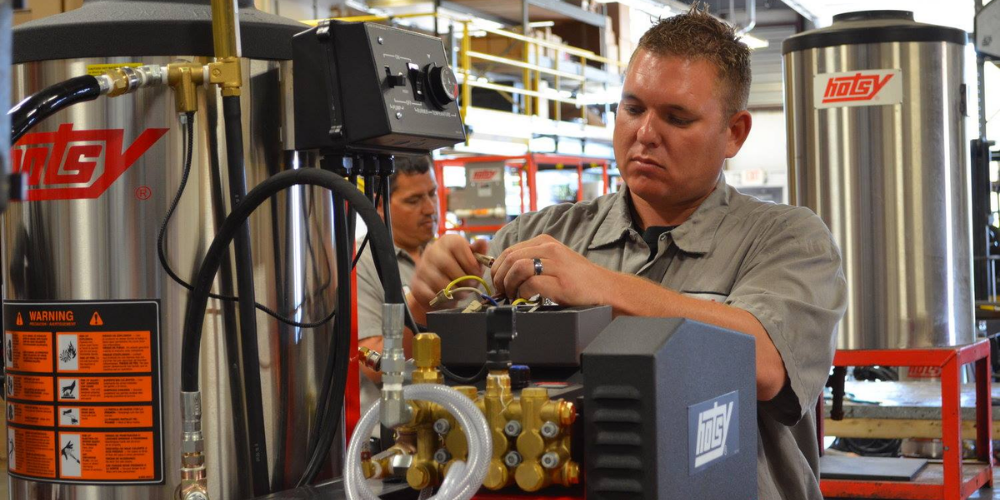
Let’s Find the Right Fit — Together
At Hotsy Equipment Company, we don’t just sell equipment — we help you match the right machine to your actual application, and then keep it running with expert maintenance and service for the life of the equipment.
Schedule a consultation or service appointment today, and we’ll walk through your application with you to recommend the right hot water pressure washer — and make sure it stays running at peak performance. Contact us to get started.
Related Posts
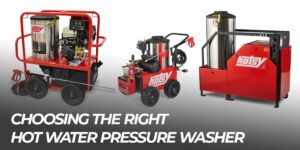
- How to Choose the Right Hot Water Pressure Washer for Your Application
 “What’s the best hot water pressure washer for what I do?” is one of the questions we hear most often…
 - My Hot Water Pressure Washer Won’t Heat Up — Here’s What’s Going OnYou turn on your hot water pressure washer expecting steam and grease-cutting heat, and instead you get… cold water. If your machine is running and spraying but the heat just won’t kick in, here’s what’s typically behind it — and why hot water machines are worth troubleshooting carefully rather than guessing.
- Why Is My Pressure Washer Losing Pressure? 7 Common Causes (And When to Call a Pro)If your pressure washer suddenly isn’t hitting as hard as it used to — or won’t build pressure at all — you’re not alone. “No pressure” and “low pressure” are two of the most common service calls we get at Hotsy Equipment Company, and the good news is that many of the causes are easy to diagnose once you know what to look for.